

This post was compiled by Rob Taylor.
Throughout this series, we’ve spoken with BC poets about their new books. Now they get a chance to share some love with others! We asked each featured writer to write about a BC poet who influenced or inspired them.
Rhea Tregebov on Kayla Czaga


Kayla Czaga was my student at UBC. I remember being knocked out by her application submission and hoping she’d accept the invitation to study at UBC. And then her participation in workshop was really constructive; she was generous and astute and kind as well as an excellent and rigorous critic. So that was a great start. The work she submitted to workshop was already highly polished but she was always eager to revise further. For Your Safety Please Hold On, her first book, was accepted for publication before she’d even finished her degree. I was struck by the sureness of voice in such a young poet, and especially struck by how she was able to incorporate humour in the most serious poems. That was a boon to me, and I find it very rare in poetry, which can lean towards the overly sincere. I’ve struggled with including humour in my own work, and Czaga was certainly a model of success. She’s followed up very rapidly with Dunk Tank and her recent Midway, and her range is certainly expanding. Czaga’s command of craft feels just effortless. She also had, and has, a lot of say. I cherish her world view, its amplitude, wisdom and generosity.
You can read Rhea Tregebov’s interview from this year’s series here.
Svetlana Ischenko on Fiona Tinwei Lam
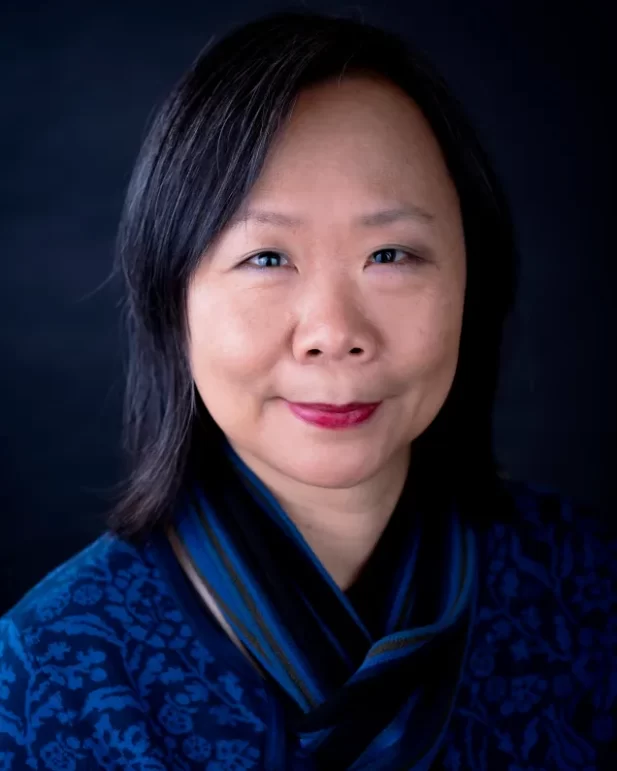
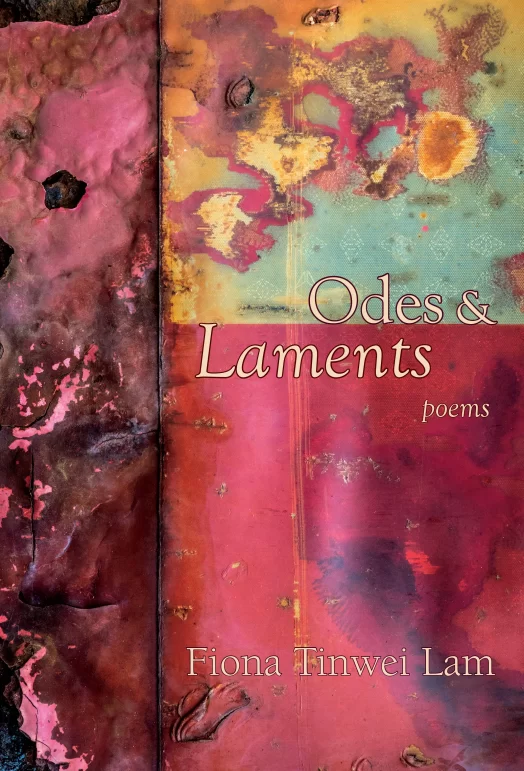
I’ve followed Fiona Tinwei Lam’s writing since I came to live in Vancouver. I like what she says about the challenges of combining motherhood and writing. Also, I like how she has supported school-age students taking their first steps in poetry, encouraging them to attempt haiku or poems about the environment, and how she has created poetry video contests for youth. But most of all, I like how she writes passionately about motherhood, family dynamics, women’s rights, romantic relationships, her heritage, and the natural world. I think she’s an exceptional craftsperson in words. I love her poem “Ode to Chopsticks,” where she pictures an everyday eating utensil as “a heron / with a long, long beak plunging down” or “twin acrobats poised / to hoist choice morsels” while she weaves strands of her Chinese cultural background into the fabric of a poem that is universal in the gentle power of its meaning. I love her poem “Utility Pole” — how she makes connections, pointing out how overlooked utility poles lining our streets once stood as trees in a “wood-wide web” of intricate communication and interrelationships in a forest. I love “Sea Star,” with its provocative, elegant metaphors. Also “Ode to a Crow,” with its playful comparisons!
Reading through Lam’s poems, I find what impresses me greatly is her frankness and her meticulous choice of words, especially when she writes about nature and intimate relationships, as in the poem “Aquarium,” where the surroundings reflect human behaviour and loneliness. This poet provides a perfect recipe for a poem that can be drawn from real life and then transformed into art and taken as a tea remedy or sipped simply for pleasure!
You can read Svetlana Ischenko’s interview from this year’s series here.
Pamela Porter on Patrick Lane

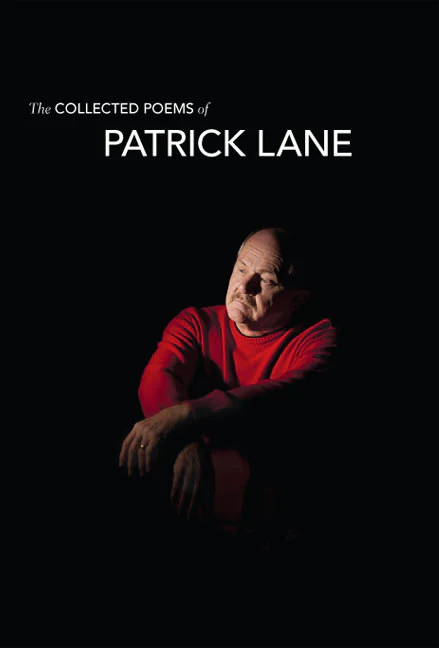
Patrick Lane was my mentor, and mentor for many of us poets on the West Coast and the Island. He led poetry retreats for years and taught us many things about poetry. I have reams of his writings on how to be a good poet. All of us who attended his retreats still talk of him with a kind of reverence. Several of us still meet once a month to go over our poems and from time to time, reminisce about him. We miss him dearly.
You can read Pamela Porter’s interview from this year’s series here.
Hamish Ballantyne on Cecily Nicholson


Cecily Nicholson is one of my favourite writers of the last few years. Her four full-length books are different in form and tone but each seems to emerge from and address some aspect of the previous book. I admire the political commitments of the writing, joining in struggle alongside discourses of border and prison abolition, decoloniality, antiracism, feminism, anti-capitalism. The poems are beautiful and lyrical, occasionally framed around a unified speaking self, and explicitly influenced by the lived experience of the poet, but rather than framing poetry as a merely expressive medium for more concrete concerns they embody the way that poetry can participate in struggle on its own terms—by safeguarding silenced histories, inaugurating a terrain beyond regimes of private property, opening eddies and stillnesses inside the flood of capitalist time. Her poems are really wise, elegiac, thoughtful, with shifting tempos, timescales, and attentions.
Wayside Sang was written, as the book’s afterword says, in part for the poet to “place myself in relation to my birth father’s history”. Its detailed speculation in this regard rhymes with the archival research of From the Poplars. As with the best poetry, its intensely specific particular results in a universal. The book takes the automobile in all its many meanings—the staple manufacture of Detroit and Windsor, the dominant mode of travel in our century, a particularly modern reshaping of time and space, and a dream of escape (Tracy Chapman’s “Fast Car” makes an appearance)—resulting in a study of twentieth-century motion itself. Along with “Fast Car”, many of the songs Nicholson “samples” in this book are chopped into reflexive postures. They describe a mundane aspect of the world of the poem—“Pressure Drop” kicks in when a car window rolls down, for example—and they can always function as diegetic sound, as music heard inside in the car. The snippet of song invokes a quantum of colour, rhythm and dance that instantly floods the poem. This function I think gets to the core of what I love about Cecily Nicholson’s poetry: language is descriptive, it bears witness and offers testimony, it is an archive, but it is essentially more. Her poetry describes the gap between mundane signification and language’s ineffable sensuousness. It articulates this gap as power, a piston, a unit of potential that poetry can harness as resistance, which is joy.
You can read Hamish Ballantyne’s interview from this year’s series here.
Estlin McPhee on Cecily Nicholson
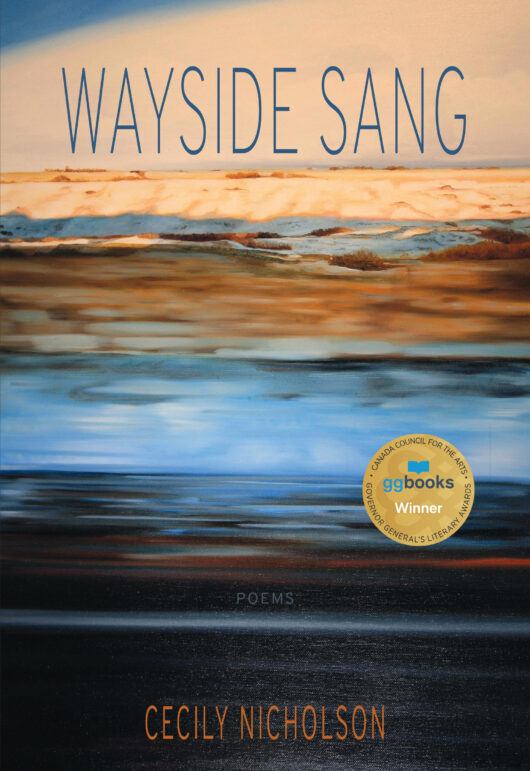
I think the poetry community here is welcoming, supportive, and uniquely exciting—and no one exemplifies those qualities more than Cecily Nicholson. I got to know Cecily through her work at Gallery Gachet, which hosted most of REVERB’s events. In 2018, she won the Governor General award for her book Wayside Sang, and she was the inaugural recipient of the Phyllis Webb Memorial Reading award from Poetry in Canada in 2023. Her writing is often place-based—although maybe it’s more accurate to say land-based, in that it grows out of the actual earth, the soil. From the Poplars, published in 2014, is an exploration of Poplar Island in New Westminster; Harrowings, published in 2022, is rooted in rural and agricultural life; and her brand new book, Crowd Source, follows the daily migrations of crows across Metro Vancouver.
I’m inspired by Cecily’s relationships to other poets, to community, to activism and justice work, and to her principles. She operates with an uncompromising kindness that creates real change, which is evident in her work both on and off the page. Her writing is so varied and interesting, moving between modalities, places, histories, and forms. Her work, more broadly, extends far beyond the medium of the book, which is something I really admire and aspire to. She works a lot behind the scenes and is committed to encouraging and uplifting other writers, and also to prison abolition, to Indigenous solidarity, and to being in relationship, period. All of that is woven into her poetry. I dream my own writing might activate people to deepen their relationships with both the self and the place the self inhabits, including all the complex histories and possible futures that that entails. I see that ignition in Cecily’s work.
You can read Estlin McPhee’s interview from this year’s series here.
Pauline Le Bel on Betsy Warland


I’ve been influenced by quite a few BC poets, but it was Betsy Warland who was responsible for lighting a poetic fire in my heart fifteen years ago, when I took evening poetry classes with her at SFU. I was quite intimidated, feeling like the great impostor. The idea of calling oneself a poet seemed so presumptuous. I had been told that the prose in my novel, plays and screenplays was poetic, but I wasn’t quite sure what that meant and I didn’t understand a lot of the poetry I read. The writing of poetry had never been a real focus for me—I grabbed a pen and paper only when the urge was too strong to say no.
Betsy changed all that. I appreciated her embodied approach. Her emphasis on breath resonated with me as a singer. She gave me the courage to write about the ordinary, and allowed me to stumble upon the extraordinary that had always been there. My writing became a more visceral practice as I was encouraged to “follow the scent.” I learned how to get out of my head, how to make a mess, how to be comfortable writing a bad poem, how to play with the words, the ideas that arose. Her approach helped me to enter a kind of “poetry zone” where I was open to possibility, to risk, to surprise. Being in her classes and reading her book, Breathing the Page, was for me a guide to poetic destinations unknown and not yet imagined.
You can read Pauline Le Bel’s interview from this year’s series here.
Cecily Nicholson on Rita Wong


Rita Wong’s poetry and practice have exemplified for me not only how to be a poet, but how to be a poet in community, and to this latter point, reminds me also of the continuing legacy of Roy Miki. As a brand new (publicly speaking) poet I’ll not forget her generous commentary on the back of my first book Triage, alongside Marie Annharte, that recognized me as a relevant presence at the heart of the city. I still well up at the thought because at that time poetry community for me was sparse, hard to relate to, and sometimes unkind. I also know that Rita has been in a supportive role for many writers through the years.
There are lots of beautiful and badass projects Rita has contributed to, like the (OG) Press Gang Publishers of course. I’ll shout out Forage especially, for its fierce confrontation with ecological crisis and injustice, its unapologetic use of Chinese characters, its engagement with visual culture, and its irreverent marginalia. In the face of industry that foregrounds competition, Rita practices collaborative poetics with brilliant results, alongside Larissa Lai in sybil unrest, with Cindy Mochizuki in perpetual, and with Fred Wah in beholden. She continues to be present in quiet and stalwart ways in defense of land, water, and our collective future, and has my deepest respect and gratitude for her work and perseverance.
You can read Cecily Nicholson’s interview from this year’s series here.
Rob Taylor’s fifth poetry collection is Weather (Gaspereau Press, 2024). He lives with his family in Port Moody, BC. You can read more of his interviews on his website.
One reply on “Candour, Craft, and Community: Seven BC Poets on the Writers They Love”
Lovely to read about these poets and accolades from their admirers. I am grateful to Fiona Tinwei Lam as well, who organized the :Write the City” poetry contest back in 2021 and who followed up with successive events – each one beautifully organized including Fiona’s famous personal touches and encouragement.
These poets are inspiration for the rest of us as we continue to shape subjects, words, lines, and stanzas into touching pictures for others to enjoy.